
What is Sudoku?
The Complete Guide to the World's Most Popular Logic Puzzle
Sudoku is a logic-based number puzzle that has captivated millions of players worldwide. Despite using numbers, it requires no math — just pure logical thinking and pattern recognition. Whether you've seen it in newspapers, on your phone, or heard friends talking about it, this guide will tell you everything you need to know.
How Does Sudoku Work?
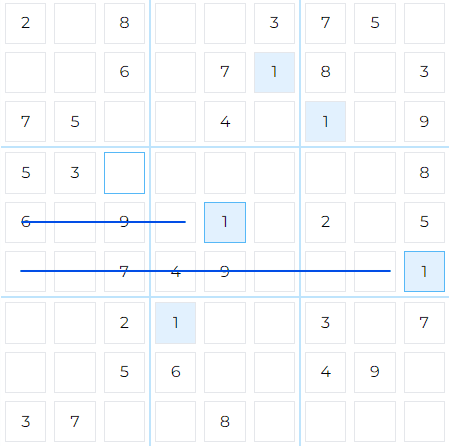
A standard Sudoku puzzle consists of a 9×9 grid, divided into nine 3×3 boxes (also called regions or blocks). When you start, some cells already contain numbers — these are the givens or clues. Your job is to fill in the empty cells.
- Each row must contain numbers 1-9 with no repetition
- Each column must contain numbers 1-9 with no repetition
- Each 3×3 box must contain numbers 1-9 with no repetition
For a detailed breakdown with visual examples, see our complete guide to Sudoku rules.
Why is Sudoku So Popular?
Since exploding onto the global scene in 2005, Sudoku has become one of the most played puzzles in history.
- No language barrier — Numbers are universal. Anyone, anywhere can play.
- No math required — Despite using numbers, you never calculate anything.
- Scalable difficulty — Puzzles range from gentle warm-ups to mind-bending challenges.
- Quick to learn — The rules take 30 seconds to understand.
- Deep to master — Advanced techniques can take years to perfect.
- Satisfying completion — Filling that last cell delivers genuine accomplishment.
Benefits of Playing Sudoku
Beyond entertainment, Sudoku offers real cognitive benefits:
Improves logical thinking and deductive reasoning.
Enhances concentration and attention to detail.
Provides a meditative, calming activity.
Keeps your mind sharp at any age.
Sudoku Difficulty Levels
Difficulty isn't about how many clues are given — it's about which solving techniques you need.
- Easy: Solved with Naked Singles and Hidden Singles.
- Medium: Usually still singles-heavy, but with tighter scans and better candidate tracking.
- Hard: Often requires Pointing Pairs, Locked Candidates, and pair/triple eliminations.
- Challenging: Introduces patterns like X-Wing, Y-Wing, Swordfish, and coloring logic.
- Expert: Expect advanced structures such as Unique Rectangle, Rectangle Elimination, and XYZ-Wing.
- Master: Deep chain techniques like XY-Chain, X-Cycle, 3D Medusa, and AIC.
How to Get Started
- Learn the two simple rules
- Try an easy puzzle — don't worry about speed
- Learn the scanning technique
- Practice using pencil marks
- Gradually increase difficulty as you improve
Ready to Play?
The best way to understand Sudoku is to play. Start with an easy puzzle.
Play Your First PuzzleContinue Learning
 Beginner
The Ultimate Beginner's Guide
A complete step-by-step walkthrough for your first puzzles.